
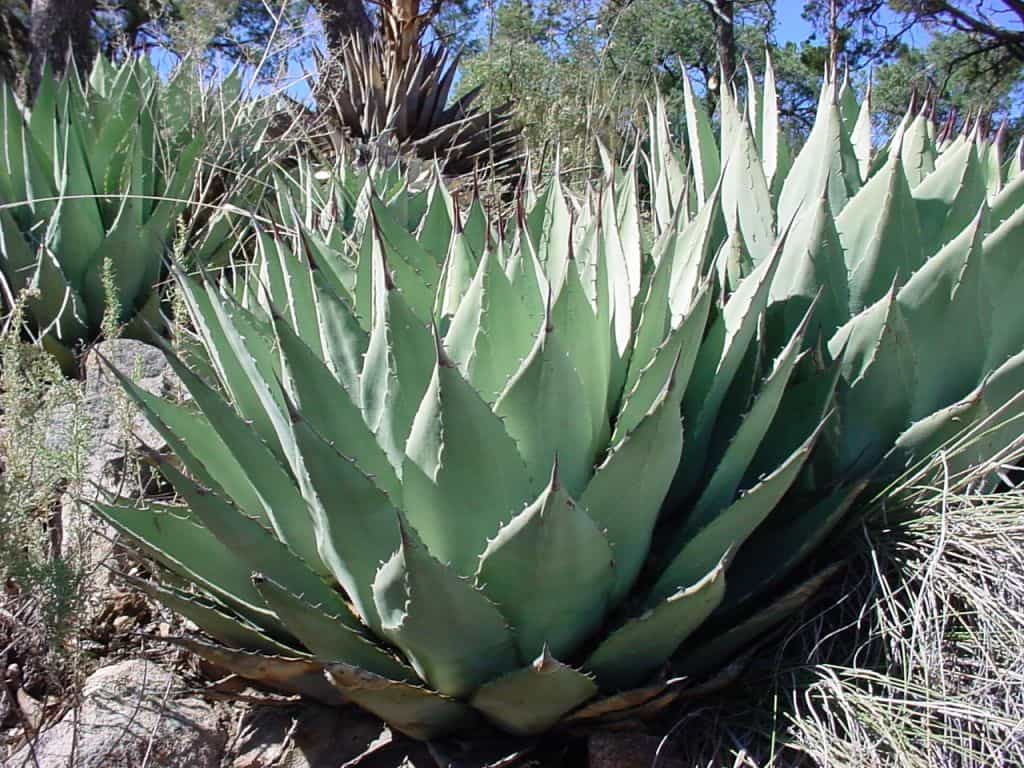
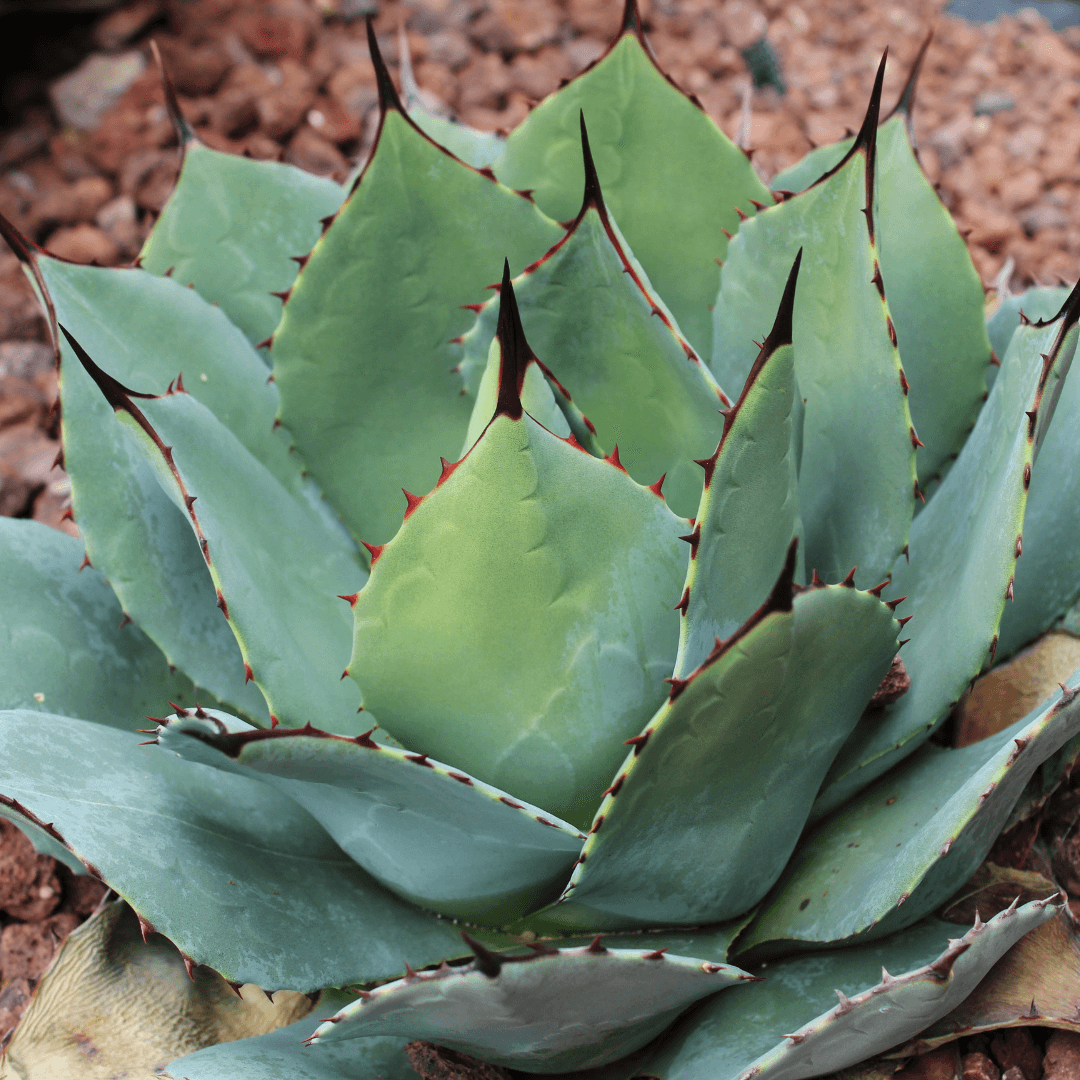
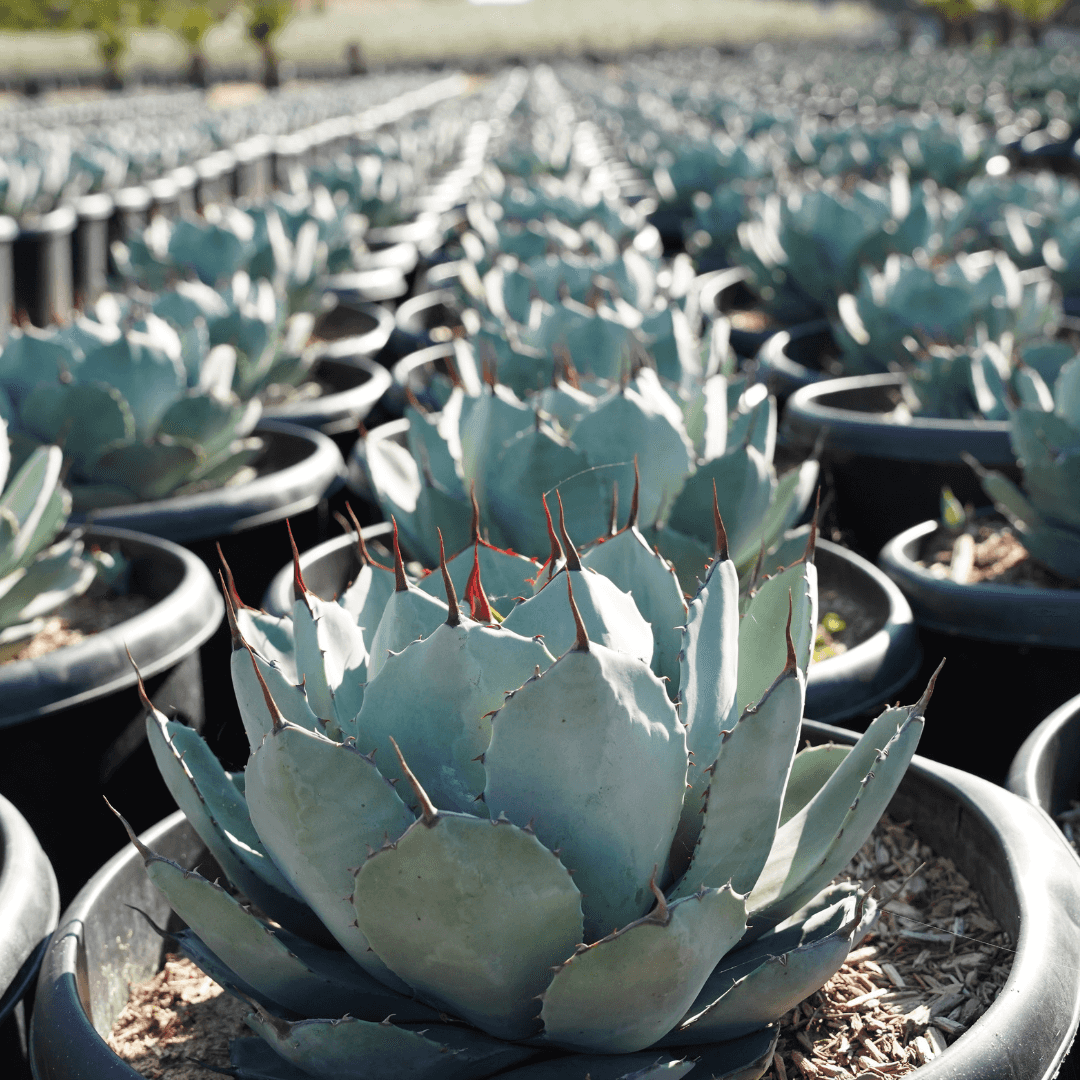
Parry's Agave has a slower growth rate and displays a pattern of leaves structured as layers of concentric circles. The leaves are spade-shaped with a tipped end, designed to capture and funnel as much water from rainfall as possible to their base. Beyond sheer beauty, these agaves will last many years before flowering, after which they die. Agaves usually live 10 to 30 years before flowering. Most agaves make pups or offshoots that replace the parent plant after it dies.
The smaller size of this Agave allows easy planting around corners, in smaller planters, and in areas where other plants may threaten to over-grow. Native to the Southwestern US and Mexico, Parry's Agave will thrive in your landscape with little care. It's an Agave, so its natural water retention capabilities leave little need for irrigation and constant monitoring, occasional watering will ensure Parry's Agave looks and stays its best.
Visit any of our Moon Valley Nurseries, and we will be happy to help you handpick the perfect plants and trees that beautify any yard! One of the best ways to increase property value is with a beautiful landscape. Relax while our professional planting crew does all the work!
At Moon Valley Nurseries we offer free in-office design consultations with one of our many skilled nursery professionals, so schedule your appointment today!
"I've been to a lot of nurseries and have seen a lot of unhealthy agaves. I figured Moon Valley Nurseries would be the same, but believe it or not, these are some of the most healthy looking agave plants I've ever seen. Good job, Moon Valley!"
An attractive succulent valued for its dramatic foliage. Dazzling silver-blue leaves are abundant, and this aloe is a great bright accent in any landscape. Great for rock gardens!
This cactus spreads out and has beautiful blooms in the late spring to early summer months. A great classic cactus look. Let Moon Valley do the planting!
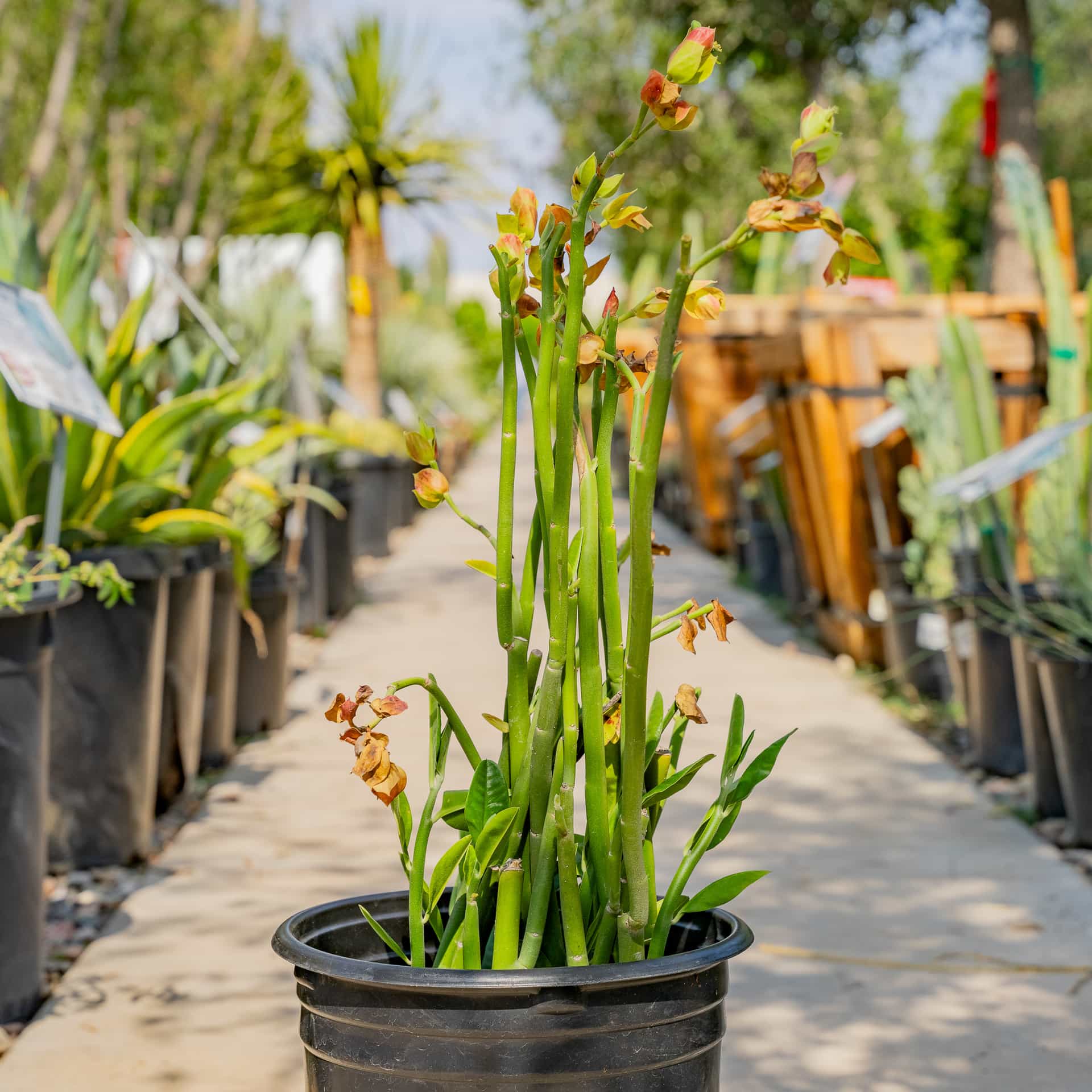
Ladys Slipper provide a great way to add color to any drought tolerant landscape! Use them as a living sculpture in any yard!
With the extreme heat and freezing temperatures of our desert climate, many of our desert acclimated trees, plants and cacti experience heat stress, freeze damage and yellowing.