California Planting Zones
Discover the Perfect Plants for Every Corner of California
With its vast and varied climate, California offers unique gardening opportunities from its sunny southern beaches to its cool northern forests. Understanding the specific planting zones and climate adaptations across California is essential for cultivating a thriving garden. Our guide is packed with all the essential information you need to make informed planting decisions for a successful California garden.
Understanding California Planting Zones:
California's landscape encompasses a broad range of ecological conditions, from coastal areas with mild temperatures to interior regions experiencing more extreme variations. Knowing your specific hardiness zone is key to garden success.
Hardiness Zones Explained:
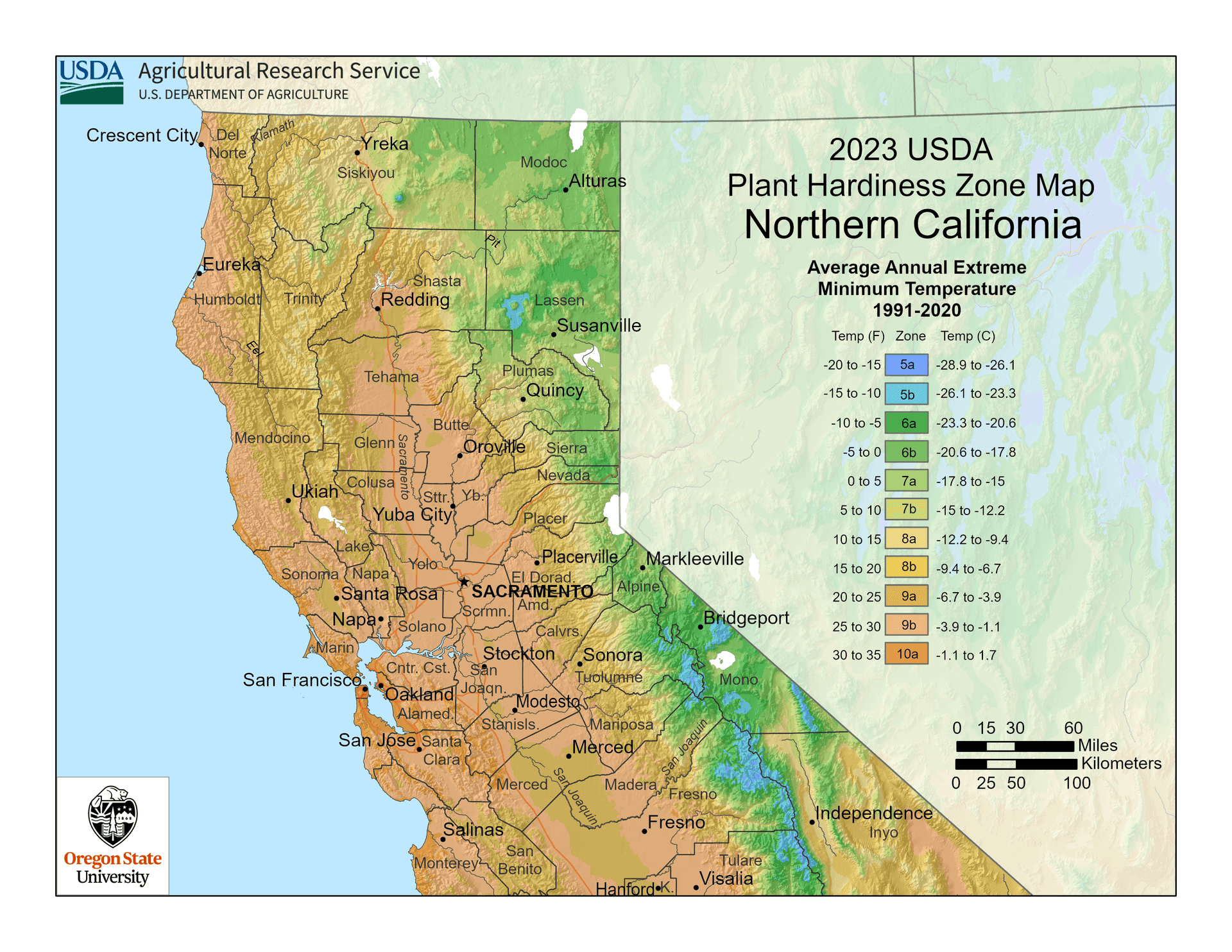
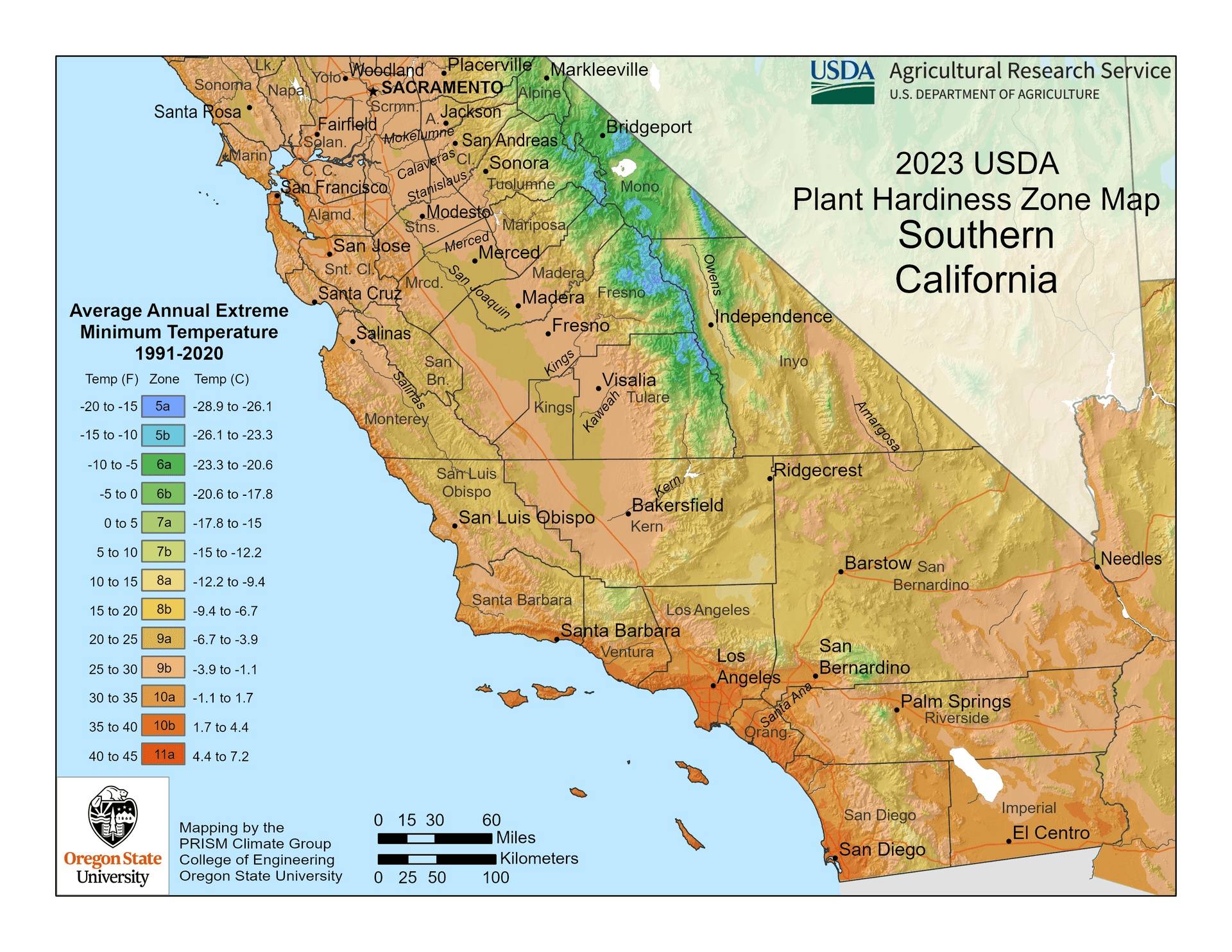
The USDA Plant Hardiness Zone Map designates areas based on the average annual minimum winter temperature. California’s zones range from 5a in the mountainous regions to 10b in the warmest coastal areas, which means a wide variety of plants can thrive here depending on local conditions.
Choosing the Right Plants for Your Zone
Zone-Specific Planting Tips:
- Coastal Areas (Zones 9b to 10b): Embrace plants that thrive in mild, wet winters and dry summers. Coastal sage and other drought-tolerant natives are perfect for these areas.
- Central Valley (Zones 8a to 9a): This region's hot summers and cold winters call for versatile plants like California poppy, almond trees, and citrus.
- Mountainous Areas (Zones 5a to 7b): Cold-hardy plants, including conifers and deciduous trees, are well-suited for these higher elevations with colder winters.