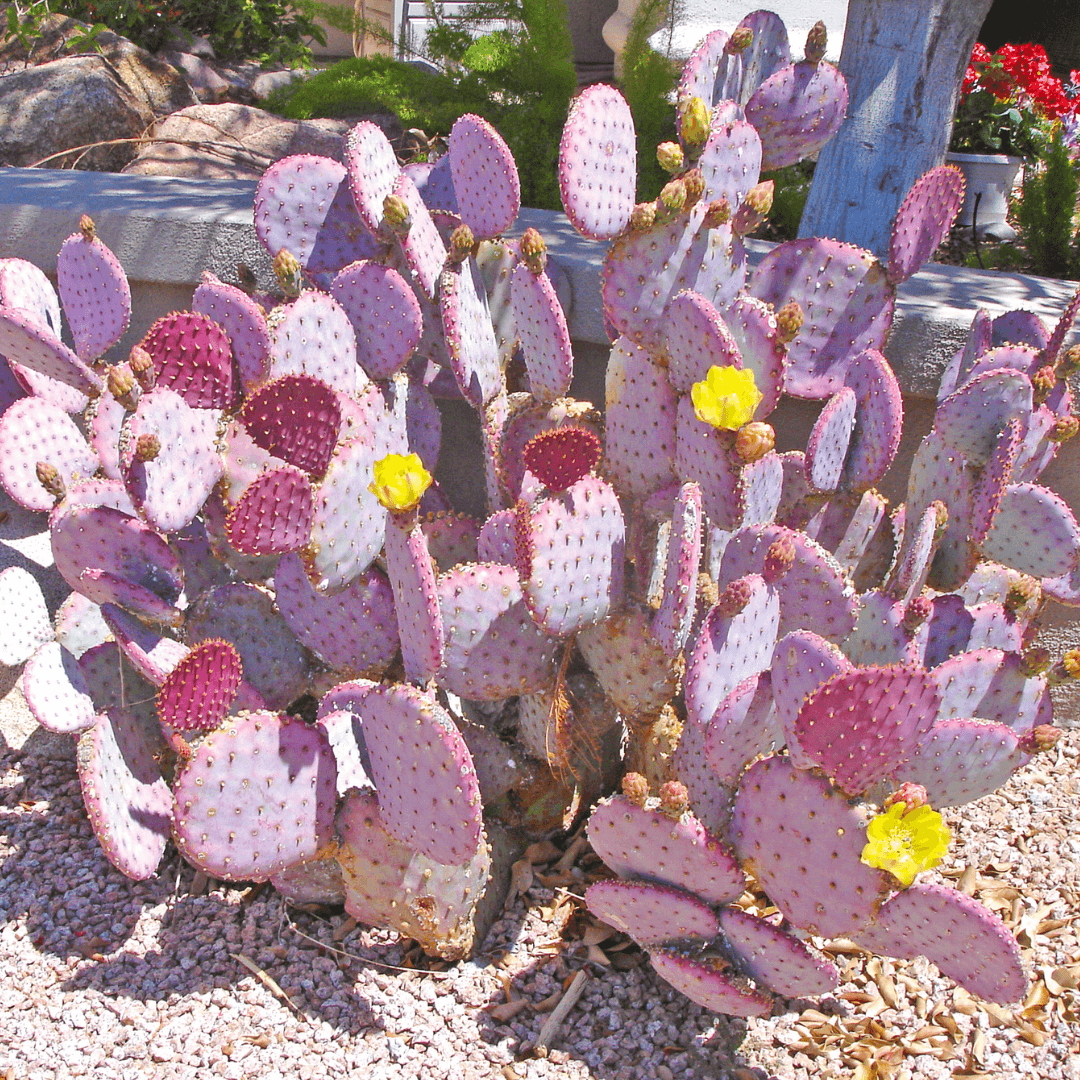
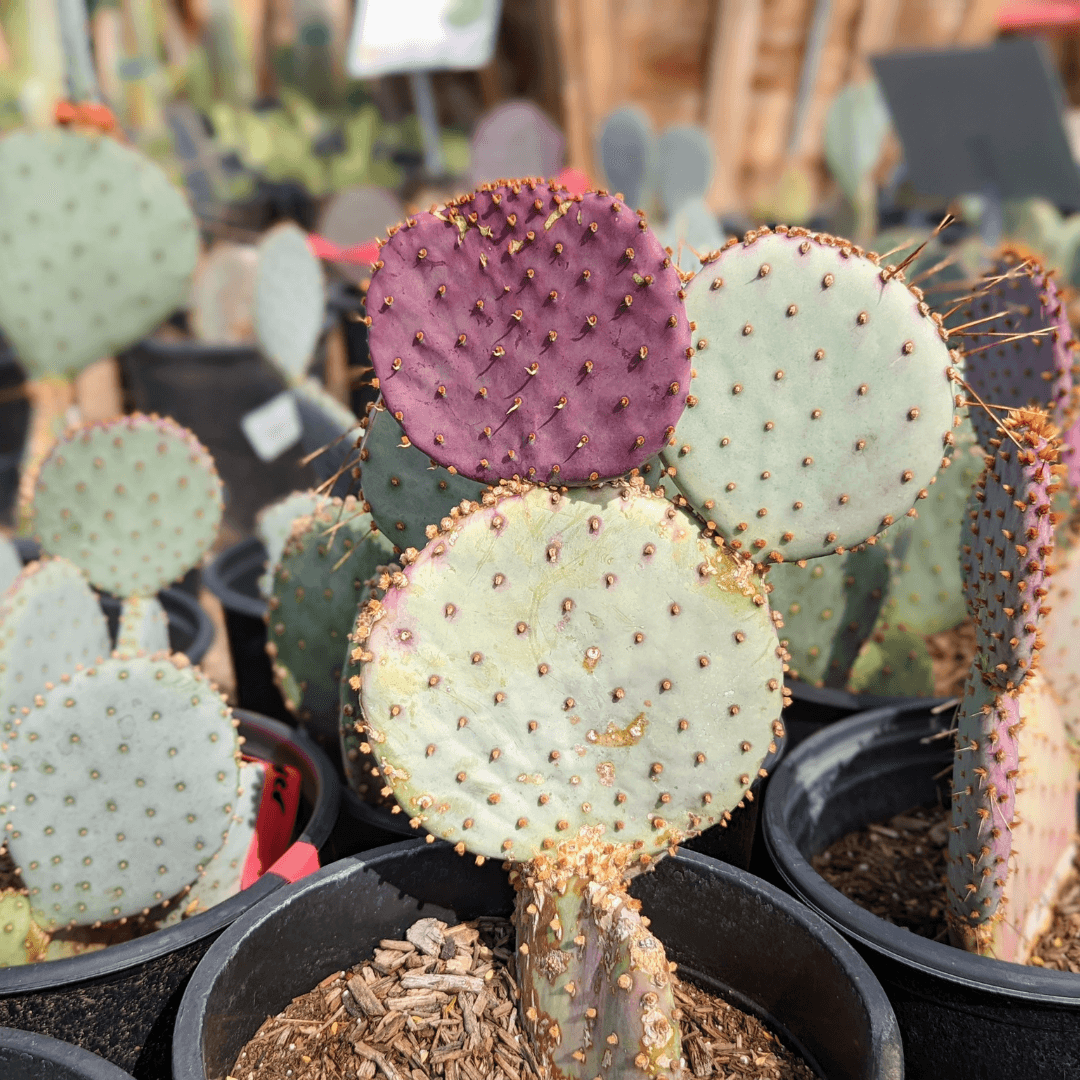
The Purple Prickly Pear Cactus is a southwest native with amazing features. Purple Prickly Pear Cacti are named for their vibrant purple pads, which provide a unique appearance compared to other cacti. The pads are flat, rounded, and covered with typically yellow or tan spines.
In spring or early summer, an abundant yellow bloom with a red center is followed by bright red to dull purple fruit, which are edible and can be used in jams, jellies, and other foods. This cactus is a great accent plant but can also serve as a screen for security or privacy. Moderately fast growers, Purple Prickly Pear Cacti usually grow to about 6 feet tall and can reach around 6 feet wide. They are very low maintenance but if you prune them, use tongs to handle the pruned parts as their tips have barbs. This cactus is best suited for full sun exposure, so don't worry about this cactus in the heat.
Visit one of our many locations today and let one of our nursery pros assist you in finding the perfect plant and placement for your yard today! At Moon Valley Nurseries we offer free in-office design consultations with one of our many skilled nursery professionals, schedule your appointment today!
"When you think of prickly pear cactus, this is the one. That purple color with the beautiful yellow golden flowers. if you want that awesome accent color and shape in your landscape this is the perfect cactus for it. I have two homes that Moon Valley planted these at for me and I love them everywhere they're planted. They work so well with other desert plants. "
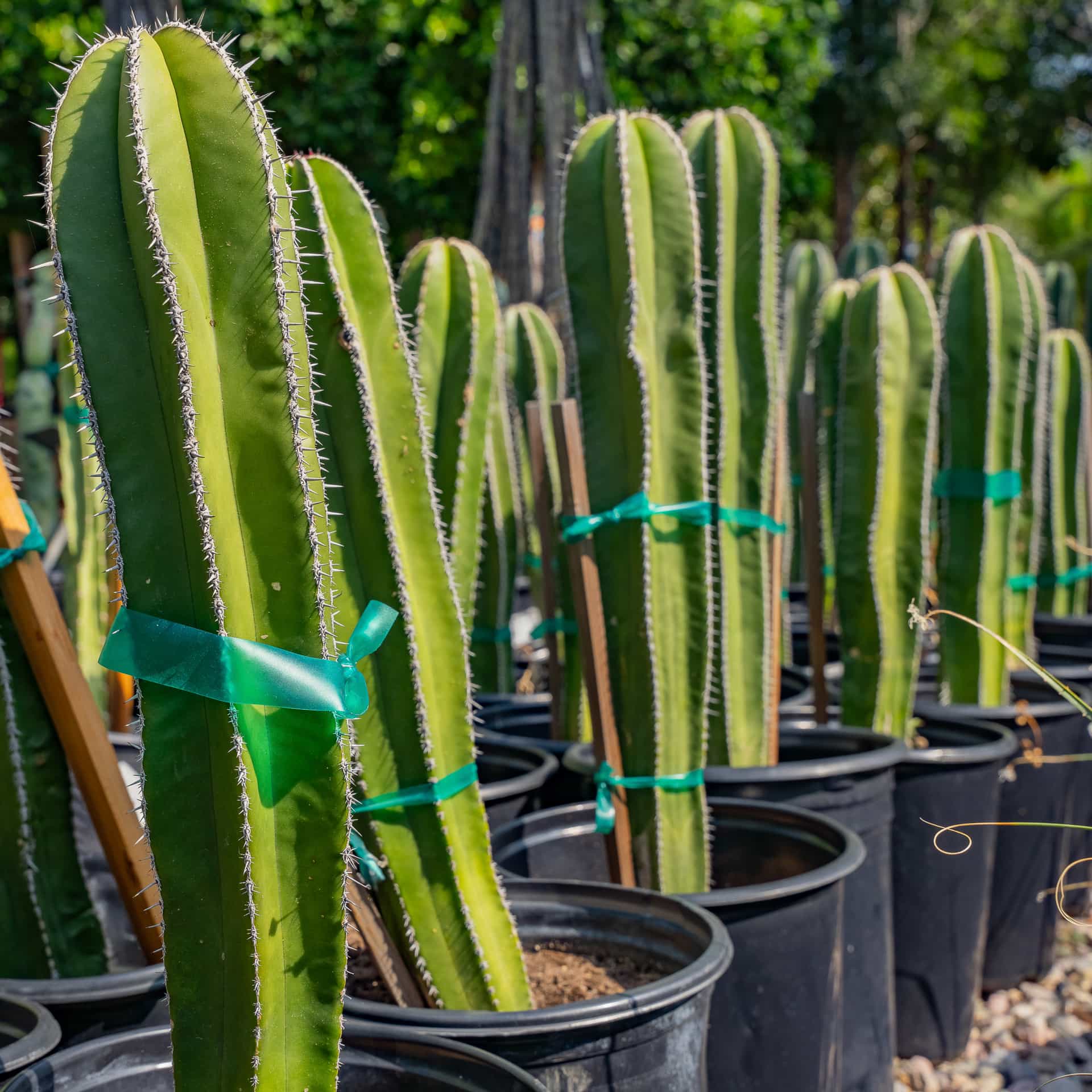
The Mexican Fence Post is one of the most attractive and cleanest-looking cacti available.
Named for its unmistakable shape and bright golden tint, the Golden Barrel Cactus grows well in any landscape.
An attractive succulent valued for its dramatic foliage. Dazzling silver-blue leaves are abundant, and this aloe is a great bright accent in any landscape. Great for rock gardens!
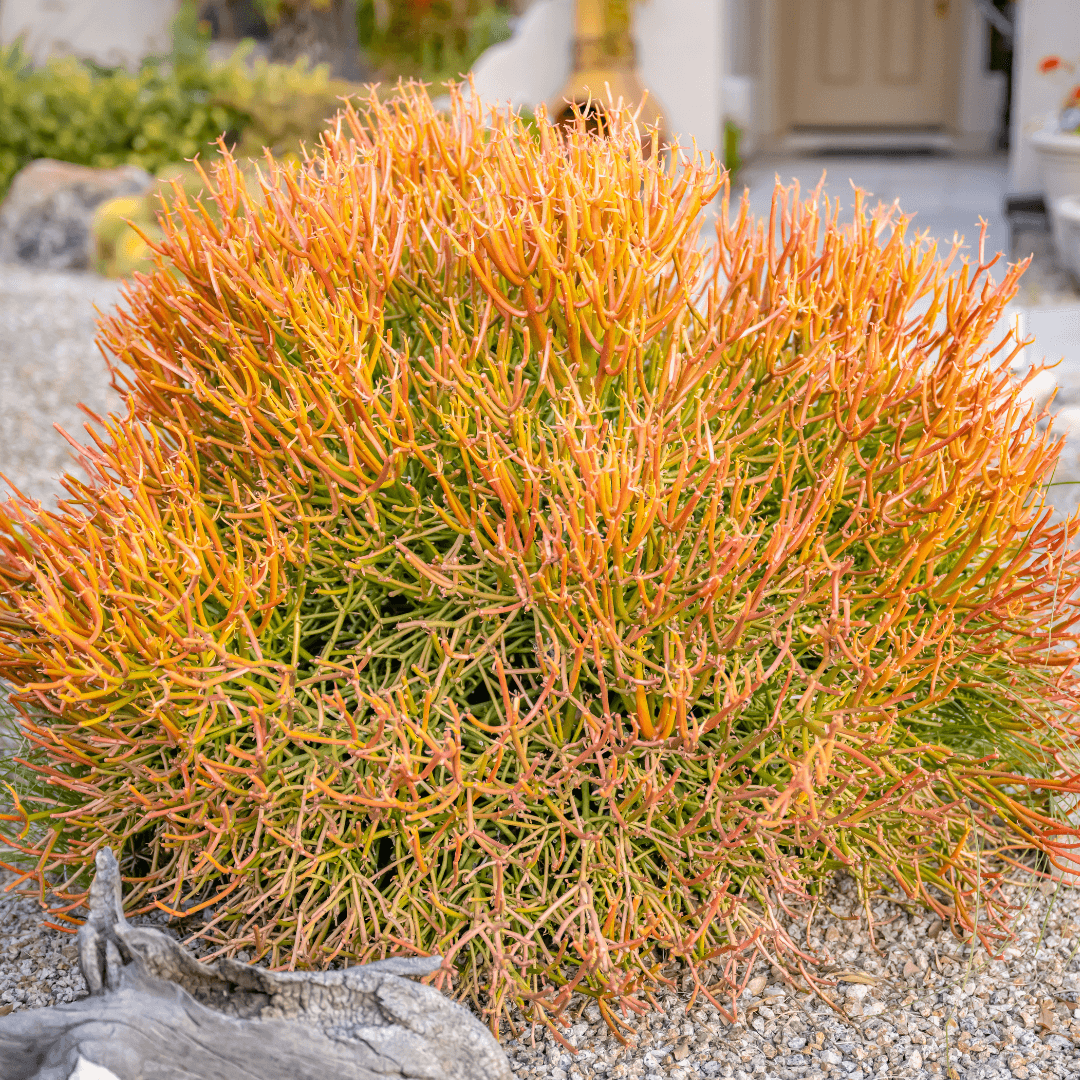
Fast becoming one of our most popular varieties, Sticks on Fire have an amazing coral structure and natural color, turning a bright fiery red in the winter.
With the extreme heat and freezing temperatures of our desert climate, many of our desert acclimated trees, plants and cacti experience heat stress, freeze damage and yellowing.
We're sorry this item is not available in your region.